Blog
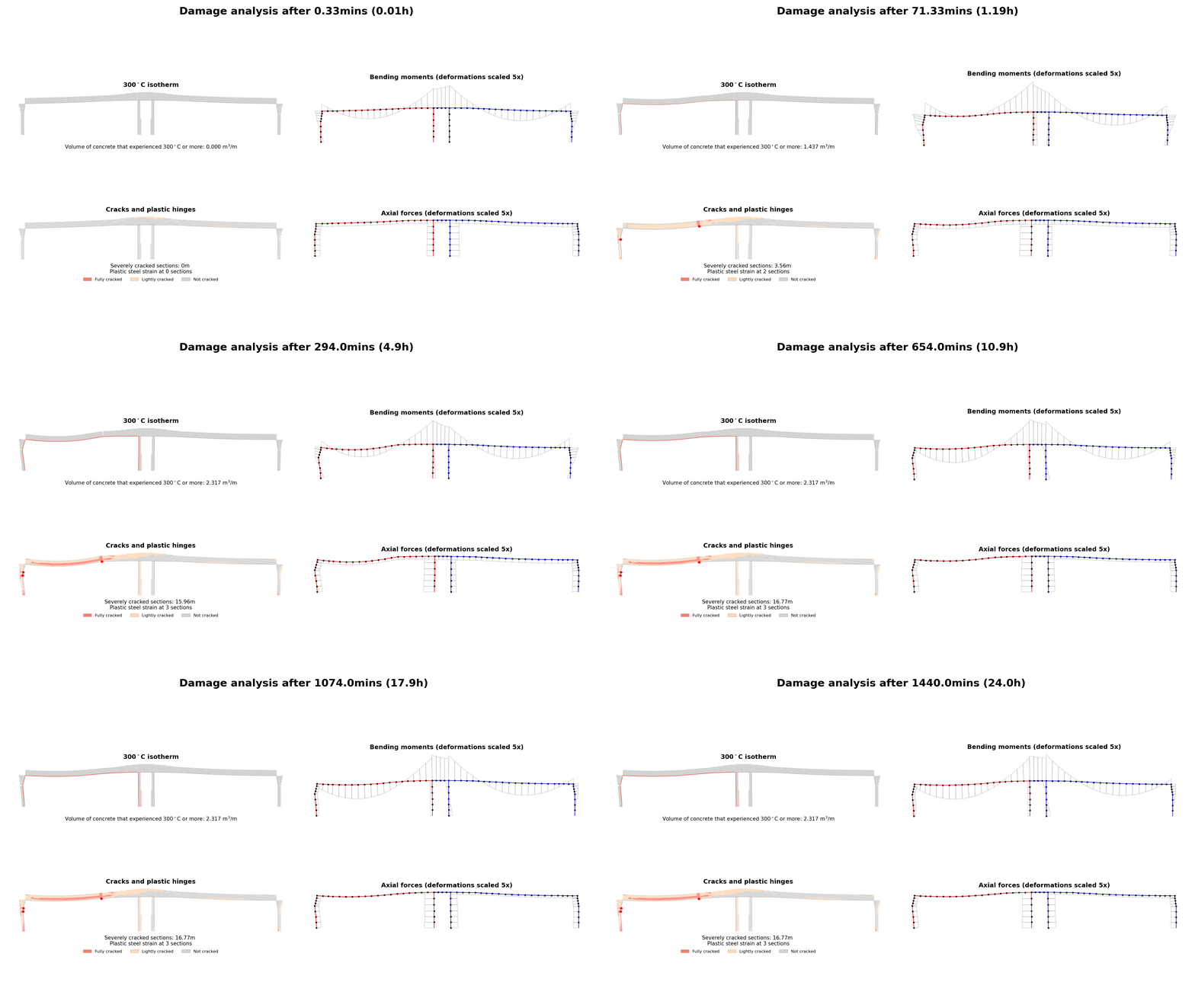
Beyond Temperature Limits: Understanding Fire Damage in Concrete Tunnels
Structures in Fire Conference, 21/05/2026
How do we know whether a concrete tunnel is still safe and repairable after a severe fire?
Fire damage in tunnels is still often assessed using temperature-based criteria. This is useful as a first check, but it does not capture the full structural response.
Read more
A tunnel fire is not only a thermal problem. High temperatures cause concrete and steel to lose strength and stiffness. At the same time, restrained thermal expansion can introduce large internal forces, cracking, and irreversible deformations.
Importantly, damage does not necessarily stop when the fire is extinguished. During the cooling phase, cracking and deformation may continue to develop.
At the 2026 Structures in Fire conference in Kingston, Ontario, Pyro Engineering presented recent research on numerical post-fire damage quantification of concrete tunnels. The work focuses on moving beyond simplified temperature checks towards a more complete assessment of structural damage, residual capacity, and repairability.
The proposed approach considers several indicators of post-fire performance, including:
- thermal damage in the concrete section;
- mechanical damage, such as cracking and yielding;
- residual deformations after heating and cooling;
- the expected repairability of the structure.
For asset owners and engineers, this type of assessment provides a more realistic basis for decision-making after a fire. Rather than asking only whether a temperature limit was exceeded, we can ask the more relevant question: is the tunnel still safe, usable, and repairable?
This is central to the work of Pyro Engineering. We help engineers, infrastructure managers, and asset owners assess fire-exposed structures using advanced numerical modelling and performance-based engineering methods.
How do we know whether a concrete tunnel is still safe and repairable after a severe fire?
Fire damage in tunnels is still often assessed using temperature-based criteria. This is useful as a first check, but it does not capture the full structural response.
Read more
A tunnel fire is not only a thermal problem. High temperatures cause concrete and steel to lose strength and stiffness. At the same time, restrained thermal expansion can introduce large internal forces, cracking, and irreversible deformations.
Importantly, damage does not necessarily stop when the fire is extinguished. During the cooling phase, cracking and deformation may continue to develop.
At the 2026 Structures in Fire conference in Kingston, Ontario, Pyro Engineering presented recent research on numerical post-fire damage quantification of concrete tunnels. The work focuses on moving beyond simplified temperature checks towards a more complete assessment of structural damage, residual capacity, and repairability.
The proposed approach considers several indicators of post-fire performance, including:
- thermal damage in the concrete section;
- mechanical damage, such as cracking and yielding;
- residual deformations after heating and cooling;
- the expected repairability of the structure.
For asset owners and engineers, this type of assessment provides a more realistic basis for decision-making after a fire. Rather than asking only whether a temperature limit was exceeded, we can ask the more relevant question: is the tunnel still safe, usable, and repairable?
This is central to the work of Pyro Engineering. We help engineers, infrastructure managers, and asset owners assess fire-exposed structures using advanced numerical modelling and performance-based engineering methods.